Pokémon Orange -A Hidden Gem in the Sea of Romhacks

Now yes, I know the phrase “hidden gem” is tired, overused, and often used to describe things that are actually pretty popular and can be found in almost anyone with a slight interest in the topic’s recommendation list.

However, I actually haven’t seen anyone mention this Romhack at all. I discovered it entirely on accident! I was just looking for nice Romhacks to play on my Analogue Pocket, preferably Pokémon Romhacks that were more like original games and not just another difficulty increase to appease the hardcore fans that want the game to kick their ass and make them min-max everything.

So What is Pokémon Orange? And why Orange?

Pokémon Orange is a Romhack of Pokémon Crystal for the Gameboy Color, developed by a user named PiaCarrot and other talented Romhackers. The goal of this hack is to make an entirely new game though. It morphs Pokémon Crystal into a game based off of the Orange Islands Arc of the Pokémon Anime.

The Orange Islands were designed to be a filler arc for the anime, while generation 2 was still being developed. The anime featured a few Johto Pokémon such as Marill, before the games were even released. Because of this, an actual game for the Orange Islands was never made, despite the anime introducing some interesting stuff that were not even in the Pokémon games yet!

Some of these include regional forms, different colored Pokémon, a league with less than 8 gyms and/or challenges. Some of these ideas the video games would use later, particularly in Sun and Moon where regional forms were introduced.

The Orange Islands seemed to have their own interesting quirks and lore that were just… never explored again. The anime itself seems to have forgotten about them from what I’ve noticed. As for the games, they just never existed in the first place. It’s been retconned out of existence.

However, I never forgot! I enjoyed this arc as a kid. It even has some of my favorite episodes of the original Pokémon anime. Tracy may have not been my favorite character too compared to Brock but goddammit, I still remember him!

So when I learned there was a, for the most part, complete Romhack that attempts to make the Orange Islands into a neat GBC Pokémon game package, I knew I had to give it a shot. There was a chance there would be “too much water” but one of my favorite things about fan games/and Romhacks is their ability to take places, or even ideas, or settings the developers have supposedly abandoned and make them a reality, and the idea of making it a Gen 2 Romhack makes it feel more authentic than making it with more modern graphics.

What Pokémon Orange Does Right

Orange’s story is described as taking place after Pokemon Red/Blue/Yellow, where your trainer is described as hearing of the triumphant feats of Pokemon Trainer Red, and decides to set out on his own Pokemon League Journey. But in his own region of the Orange Islands Archipelago.

Your starters are the basic Charmander, Bulbasaur, and Squirtle. But you also quickly get a Lapras and the HM Surf shortly after you are tasked with delivering the GS Ball to Samson Oak (From the Sun/Moon games) and in the process of that, you are tasked with getting the Four Gym Badges from the Orange Crew, which pulls characters straight from the anime arc itself.

It is a very basic Pokémon story. Beat the gyms, defeat the champion, a post-game with some extra story attached to it. But that’s part of why I like it so much. It feels like the Orange Islands game that Gamefreak just never got around to making. There are a few things that might be unfaithful to the experience though. Personally, I do not mind them but it isn’t exactly loyal to that strange period between Gen I and Gen II.

  • The Dex has nearly 300ish Pokémon. It includes a decent amount of Johto Pokemon and a few from the Hoenn region, and Marshadow is there as part of a 20th movie style side quest. Many of the additions make sense to me and fit the island atmosphere though.
  • You have the running shoes from the start.
  • There is an EXP All item that mimics the EXP Share from later games that distributes EXP to your entire party. You are allowed to turn it off, and you do not get it until after the first gyms.
  • Along with the Orange Island variants of Pokémon from the anime, Alolan forms are also available.

But other than those things, it essentially does feel like a Gamefreak game. Most of these additions just feel more like modern Gamefreak than early Gamefreak though. All of these editions are in my opinion, quality of life improvements and the added list of Pokémon makes the Orange Islands feel like a real location and less of a weird in-between filler arc.

Many aspects of the islands are kept intact from the anime. The Golden Village worships Meowth, Pinkan Island is full of pink colored Pokémon… and Pinkan Berries that actually work! You can turn any Pokémon Pink. I personally went with a Pink Charizard because why the fuck not?

The writing mostly feels consistent with the games too. There’s no real use of random expletives or edgy dialogue that permeates many romhacks. The only thing that might feel unofficial are the few references to Vietnamese Crystal, a few references to the anime’s quotable dub dialogue, and the random Love Live reference on one of the signs. The hack does have a story inspired by the anime though, so some anime characters like Jessie, James, Butch, and Cassidy make an appearance. There aren’t very many moments though where I felt like I was playing something that wasn’t really professional or made without any real direction or intention. PiaCarrot clearly has a vision for the completed version of this game, even if it’s not entirely there yet. Creating a nearly original region layout… is no small feat!

Due to the nature of the Orange Islands the game can seem short though. There are only 4 Gym Leaders on the Orange Islands. The gyms themselves aren’t really anything to write home about, but the teams and battles are cool. I also cannot speak for how Romhackers add in sprites for Pokémon that were never in the GBC entries in the first place but there’s many amazing sprites, Alolan Exeggutor being my favorite.

I mean just look at that sprite

The Original Soundtrack

Something that definitely sets this hack apart from others is the mostly original soundtrack. Some of the songs are GBC conversions of other songs, but the ones you hear the most like the Wild Battle and Trainer Battle Theme… all original! It is composed by Monstarules, and you can find the OST on Soundcloud.

None of the music sounds out of place. It sounds like actual Pokémon themes! I do notice more drum usage than the actual Gold and Silver does, but I’d rather them use it than not use it. The drums give the music more energy. It’s actually weird to go back to listen to Gold and Silver’s GBC soundtrack and notice the drums suddenly missing from music like the Team Rocket battle theme after playing this hack.

The Criticisms…

After all this praise, I do have a few critcisms about the game. First of all… the hack can be a little bit on the easy side. Especially if you use the EXP All. This can be fixed by turning EXP All off… but then the game becomes a bit of a grind. There is not much of an in-between. There’s also a few gamebreaking glitches in regards to a legendary and dex completion in the version of the patch that I played, and the only solution really is just to restart your game.

One criticism I could see others having is the lack of variety in environments. The game is mostly just islands and caves. There’s a snow area and a few other things… but you will be using Surf a ton. They made surf automatically activate and you move much faster though.

But honestly that’s… really about it in regards to criticisms! Outside of an obviously missing island that you can’t really approach.

At this point it does seem like PiaCarrot is working on Island Walker too. So this version of the game is unlikely to be finished, but Island Walker is going to be a better version of Orange, on the Polished Crystal Engine, with more features and more unique aspects. So whenever it happens… I can’t wait! I will be playing again.

In Conclusion, Nostalgia

Nostalgia for a part of Pokémon that was a very big part of my childhood, that has never been mentioned again. Yes the Orange Islands are the definition of an anime original filler arc, but I actually find it crazy that they thought all that lore was just worth throwing away. Clearly a game could be made out of it, and PiaCarrot and others have definitely succeeded in doing that.

Overall, I give Pokemon Orange….

A 9/10

And I am sure Island Walker will basically be as based as a Pokémon Romhack can get.

The Cycle of Comparisons to Popular Video Games, and You

If there is one specific type of reactionary response that annoys me on the internet, it’s the reactions people have to people comparing one game to another. Usually one newer game to an older critically acclaimed game.

We have seen it happen with many games, especially Dark Souls, which blew up earlier than any other. People would compare any difficult game to Dark Souls, even those that weren’t in the Souls-like genre like Nioh. After it starts happening often enough, people get sick of it. Even older games like Mega Man, probably got compared to Dark Souls at one point due to the trial-and-error nature of its gameplay.

Now at first, I was annoyed at this too. Why was this the default? Why were games older than it being compared to it?

Then as I got older and saw it happen to more games, I realized that it is really not that big of a deal.

These articles, these comparisons by randoms on Twitter, Facebook, or whatever part of the internet that is considered to have a higher concentration of non-hardcore gamers aren’t meant for me. Video Games are a growing medium, new people are getting into them. There’s more gamers today than there were 20 years ago. there is a lot of clickbaity articles out there that I would mentally scoff at, but my co-worker probably would click on and read like nothing is wrong.

Sometimes I even find myself reaching for comparisons when I talk about more niche titles with people who are not in the know. I take a small element of the niche game and compare it to a more popular title. Usually, it’s a lot better than awkwardly ending the conversation and saying, “yeah you wouldn’t get it, the game is too NICHE.”

Someone who doesn’t play a lot of JRPGs asks what Trails is like? I tell them it’s a turn-based RPG, and for the Cold Steel games I compare the bonding system to Persona.


Someone asks what Stella Glow is like? I immediately say it’s like Fire Emblem.


Someone asks what older Ys games are like? I basically say they’re like a faster Zelda!


Me, and so many others do this all the time. Yet there are some games that you can’t make comparisons to because they are “overdone.” It’s apparently one of the Seven Deadly Sins of the Internet.

Because of this I find the double standard with popular titles to be… weird. Recently we’ve seen a surge in comparisons to games like Breath of the Wild and Persona 5. Sometimes the latter does have a few comparisons that even make me wonder how far the author or person is reaching, and it does happen often. There is an explanation for this though.

Both of these games are popular, extremely well received titles in their respective genres. Maybe you don’t like them, but so many other people do.


Breath of the Wild is considered to be innovative for open world games. Some even say that they hate open world games, but Breath of the Wild is fun.


Persona 5 on the other hand, has gotten to this status where it has become the “JRPG for people that don’t typically like JRPGs.” It does attract fans of the genre too, but this is because Persona 5 perfects a lot of things in terms of gameplay. The flashy, but readable UIs are appealing, the turn-based combat feels snappy and well animated, the combat is more than just spamming the same 3 skills over and over, and the dungeon design is usually praised outside of a certain one.

Both these games have very high Metacritic and Open Critic scores. One innovated a genre, and the other made some people realize that they might actually like a genre.

Makes sense, doesn’t it?

Hey, Twitter user. It’s really not that deep. At least make joke instead of just being rude!

That’s why it’s better to just ignore than get mad. Sometimes people even make innocent comparisons, like comparing Yakuza Like a Dragon’s Battle UI to Persona 5, and people get attacked in their comments. No one’s saying that Persona 5 invented that battle UI. Some of us know Super Mario RPG did it first. But Persona 5 was a popular game that used it, when a lot of other games were not at the time.

 More often than not, when people make these comparisons, they use the wording “This reminds me of game”, and people dogpile their comments acting like they said that that game invented it.

Yes, there are people out there who would make crazy claims like “Persona 5 saved JRPGs.” That is silly, and pretty much not true since JRPGs were doing alright.

Same for Breath of the Wild. No one’s actually saying Breath of the Wild invented grass in video games. They’re just saying that the new Pokémon game reminds them of Breath of the Wild due to a few similarities in framing, game design, and art. Most of the posts are jokes, but I have seen many posts along the lines of “can we not?” and “not every game that has mountains and grass is Breath of the Wild!”

The key word here is remind. If someone actually says invented, then maybe they should go take a look at some gaming history.
Just don’t be a dick about it though.

The whole thing is a good example of “But actually-“ism where people feel the need to tell you that you’re wrong even when you haven’t posted something that’s actually false. Maybe it’s overdone, yes, but not everyone is aware of that. Not everyone is on the internet every waking hour of the day. Not everyone has played 100+ 70 hour JRPGs like you have.

While there are a few bad actors out there trying to push actual false claims, more often than not it’s people freaking out over harmless stuff like an article written on a no-name website.
And what’s even funnier is that now that no-name website just got a bunch of clicks thanks to people rage-sharing it over Twitter. Hundreds of quote-tweets later, you probably made the site some money!

Now for a counterpoint, maybe this isn’t such a big deal that I should be writing something about it. Usually this just lasts a day and people go on with their lives. It’s honestly not that big of a deal. It’s just the internet, and it’s probably going to happen for years, and maybe even for another series we don’t expect. Maybe they’ll make a Leisure Suit Larry game with amazing gameplay, people will make more adult games, and people will say “Man this adult game is just like Leisure Suit Larry 8!” It’s almost an inevitability, and the rage sharing cycle that ensues will be just as annoying as the last one

People really just don’t like it when you even dare to compare Dark Souls to muh Mega Manz.

Either way, for a closing note.


Nothing is original
Everything is derivative
Many games, even those in different genres might take cues from others.
One game might be similar to another, even if not directly inspired by another.
And the Monstrums in Ys IX are kind of similar to the Phantom Thieves because both are stylized forms the main casts don for acts of vigilante heroism-

Due to this article being rage shared on Twitter dot com, we have decided to omit the rest.

Robotics;Notes Elite – Sort of a Review

“It matters not how strait the gate,
How charged with punishments the scroll.
I am the master of my fate:
I am the captain of my soul.”

– William Ernest Henley

Robotics;Notes Elite opens up with this fine quote from the English poet that perfectly captures the main theme of the game.


At some point in life, we all come to a crossroad. This usually happens around late high school, right before you turn 18. Not everyone’s dreams are possible to achieve. Some lack the connections or natural talent. When you get to this point, do you give up on your dreams and go with the flow, landing a stable, but unfulfilling career to make ends meet, or do you choose to pursue your dream, not matter how hard it may be to achieve?

The characters in Robotics;Notes choose the latter, and decide that no matter how rough the path, and how tough the challenge, it’s best to go after their dream of building a giant, bipedal robot. Similar to the ones that the main female lead, Akiho used to watch in an in-universe anime titled Mobile Battler Gunvarrel.

Robotics;Notes takes place in an alternate 2019 that outside of one key difference, is not too different from how the world is today. Somewhere around the early 2010s, Mobile Battler Gunvarrel broke records on international television and started a robot boom. People all over the world, not just Japan, became obsessed with robots, whether for service, fighting, or building them as a hobby.

Gunvarrel has left a lasting impact on the world, and it affects both our protagonists, Akiho Senomiya, and Kaito Yashio. Kaito is more obsessed with a fighting game called Kill-Ballad, which features the giant robots from Gunvarrel as playable characters. Kaito cares about little else besides this game, but he does care for Akiho, despite his complaints.

Seems like a happy story on the surface, right? Two late teens trying to build a giant robot using the power of hard work, never giving up, and friendship. Sadly, life isn’t that simple, and even in the “happiest” game in the series, there’s more to this game’s story than meets the eye.

Despite my comment above, Robotics;Notes Elite is, in a sense, the black sheep of the series. When the anime aired, most people were rather disappointed in it, calling it a weak sequel to Steins;Gate. This isn’t really true however, because it’s a very different story from Steins;Gate, and it isn’t much of a sequel. I can now confirm that a good chunk of the issues people had with it is due to the quality of the adaptation. Steins;Gate seems to be an anomaly when it comes to anime adaptations, and Robotics;Notes did not get the same treatment. The visual novel is far better paced, plot points are given more room to breathe, and characters get more development than the anime’s 22 episode count allowed for. Now that Robotics;Notes Elite is out in English, the anime might as well be ignored.

Robotics;Notes Elite excels in it’s character writing. While their designs are little more “generic” compared to the colorful cast of Steins;Gate, these characters probably have the most depth and development compared to any of the other SciADV games. I attribute this to Robotics;Notes being a more character driven narrative, while the stories of Steins;Gate and Chaos;Child were more story driven, even if they did character development quite well. I honestly fell in love with nearly every character, even some that I thought I would hate, and will be glad to see them again when I play Robotics;Notes DaSH. My favorite though, would have to be Kona Furugoori, only because she’s a little gremlin that speaks like she’s on the internet in real life, and I do not care what anyone says, it’s funny as hell.

Despite the happier exterior, Robotics;Notes does have a dark underbelly. Some could take issue with this, because compared to other SciADV games it’s just a dark underbelly. Majority of the game’s most tragic and darker events do not happen to the main characters. In fact, a lot of them happen off-screen, they already happened in the past, or you read about them on the in-game Twitter clone, Twipo. While this is valid in it’s own right as it feels slightly unsettling, if you neglect to check Twipo every now and then you might miss out on a few details that might shock or surprise you. Twipo is something that you have to check manually, though the game does alert you when new Tweeps come in after you get past the game’s 5th chapter. While the story really kicks up the last three chapters, most of the darker things you have come to expect from this series are more sprinkled in as a rather unsettling decoration.

The rest of the game’s darker undertones are found in the 7 Kimijima reports scattered throughout the island. The first few are found for you, but you later need to go on pixel hunts using the in-game “smartphone” of sorts called the Phonedroid. The Kimijima reports contain the stuff most SciADV fans are most likely interested in, all the conspiracy mumbo jumbo the that the series is known for. This game doubles down on the conspiracy though, using a real life conspiracy surrounding the Tavistock Institute as a backdrop, similar to how Steins;Gate used the internet forum story of John Titor as its backdrop.

Mentioning chapters and the reports brings us to my first major complaint about Robotics;Notes, the route system. SciADV games are known for their confusing route systems, but at least with Steins;Gate and Chaos;Child, there was a valid reason for these sections being split into routes. Robotics;Notes Elite however… has no real excuse. The route system is simply there to confuse the player, and make them look up a guide. Each route happens in chronological order, and you can’t, say, do Phase 7 or Phase 8 before Phase 6.

Routes are unlocked through responding to the proper Tweeps on Twipo. This is similar to Steins;Gate’s text message trigger system, though you mainly needed a guide in Steins;Gate to reach the true ending. In Robotics;Notes Elite, you’ll probably need a guide to unlock Phase 6. You unlock Phase’s 6, 7, and 8 by responding to very specific Tweeps, with specific answers near the end of chapter 5, so it’s best that you keep a save file at this point so you don’t have to murder the skip button. There is no reason for the routes to work like this, and it only serves to further confuse the player, and make them look up a guide. There’s no harm done since English, spoiler-free guides are readily available on the internet, but is there really any reason for the route unlocks to be this confusing when they all take place after one another?

Now you can suffer through your friends being horny on main both in real life, and in a video game.

Robotics;Notes Elite is also a somewhat revised version of the original game. Elite fixes the pacing the original Robotics;Notes had, and occasionally sprinkles in scenes from the anime to cut down on expositive text. Most of these are spliced in rather well, and there’s not too many of them compared to Steins;Gate Elite, which will make people who are a fan of the original presentation happy. The rest of the game is present using 3D models amid a 2D background, and the occasional CG scene that is 2D-Anime styled. Sometimes the animations on the characters are stilted and awkward, but so are a lot of VNs using 3D graphics in 2012. The music, while most of it is nothing special, is always fitting. There’s a few songs that will get you emotional, but the main bops are the vocal songs used for the credits, opening, and the true ending theme.

The main aspect that Robotics;Notes Elite has going for it over other SciADV games is the lore. Major fans of the series will want to play this if they want to learn more about the series’ overarching plot surrounding a certain organization. That being said, due to this I would not recommend Robotics;Notes as someone’s first SciADV game. While you could theoretically start with it and understand what’s going on, you might find yourself bored. I don’t think Robotics;Notes is the weakest SciADV game, but it’s feels like the weakest starting point for the series. It would be best if you had experience with either Steins;Gate or Chaos;Head before jumping in. Robotics;Notes builds upon, and references a few things from those two entries in the series, and at the point we are at, it does feel like a game that is more made for the fans, and not one meant to draw in newcomers. Some will still enjoy the game’s implementation of real robotics concepts, augmented reality, and conspiracy theories, but it depends on what you value in a story. If you’re a huge fan of slice of life, this game could be more up your alley than the Steins; and Chaos; games are.

The game’s localization is another mixed bag. While the story text is localized very well and flows naturally, there are a few translation issues in regards to terms from Chaos;Head being “mistranslated” and I sometimes call into the question the quality of the Twipo translations. The SciADV games are one of the few series out there that does in-game social media right. I love browsing @channel in earlier entries, and it always gave me a good laugh. Robotics;Notes ditches it for Twipo, and while some of the Tweeps are still very funny and read well, a lot of them are very stilted and feel like they are literally translated. Maybe the denizens of Twipo are more calm than @channelers, and most of the Tweeps from the main cast and the cameo accounts read fine, but something just felt off about them. It felt like a lot of Tweeps didn’t get the same attention that the main script got.

The typo is intentional, but there’s a lot of Tweeps that read like this.

As for the terms from Chaos;Head that got changed, a lot of them aren’t exactly incorrect. It would be a spoiler to mention one of them, but they change the common conspiracy term “New World Order” to “One World Order,” and they mistranslate the name of Chaos;Head protagonist Nishijou Takumi, as Takumi Sajiyo. There’s also a common term in the Kimijima reports that is changed. Apparently these are all terms that the developers, MAGES, approved, and they are changed because Chaos;Head was never officially localized. That is, the game was never officially localized. While the Chaos;Head anime is the last thing most fans would recommend, Funimation has dubbed and subbed it, and all the terms used in this anime translation are nearly consistent with the terms and names that the fan translation of the game uses. It does call into the question why they couldn’t just look to the anime for advice, but it is what it is. If you’re that picky, the Committee of Zero is releasing a fan-made patch for the PC version that changes these terms back. Overall though, the localization quality is great, minus these hiccups. I’m not sure if these will ever be officially patched, given the fact that MAGES themselves approved the usage of these names and terms.

Overall, despite a few issues, I highly recommend Robotics;Notes Elite if you are already a fan of the series. While Robotics;Notes will most likely not draw many newcomers, the game does a great job at showcasing a more light hearted side of the series, and manages to tell a more character driven narrative with mystery and intrigue. If character driven narratives, giant robots, the power of friendship, and dreams are your favorite things, you will have a blast clicking the A button and occasionally pressing the ZR button through this visual novel.

If you want to get an idea of where I’d rank it, I’ll say that it’s certainly better than Steins;Gate 0.

Translation Spreedsheets, Overlays, Video Translations, and Why I Will Never Use Them

The joys of being a Japanese game fan. Sometimes our games don’t even get translated into English! Why I haven’t bit the bullet and learned Japanese, I’ll never know. I’ve even considered learning French recently for reasons, but that is unrelated. Sometimes these games will get fan translations that you can actually play naturally, but fan translations require tons of work because you need to go into the game’s coding, change the menus, stylize everything translate videos, ect. It’s not exactly easy.

I want to start this off saying I have nothing against people who use translation spreadsheets or overlays. If you do not mind playing a game like that, you are fine. I respect you, actually. It shows that you are really dedicated and excited about the series or game you are playing. If you make these spreadsheets, you are even cooler since you have dedicated your free time to making a game accessible to those who need their fix immediately.

For me though… While I’ve considered using one to play certain games with one before, there are multiple factors that just turn me off from the whole experience. Every time I think about those aspects, it seems like it’s “not worth it” or “exhausting.”

Why do translation spreadsheets get made, and what games are they made for? Mostly for games that either have no hope of localization, or games in a series that are really far behind on localization. A good example of the former is Tales of Rebirth, which has a Youtube video translation, and a good example of the latter is Trails of Cold Steel IV, which is getting an officially localization by NISA later this year. In fact, the Trails series is no stranger to translation spreadsheets. Before Trails from Zero and Azure got fan translation patches, people used Excel spreadsheets to translate and play the games.

Excerpt from the spreadsheet translation for Trails to Azure/Ao No Kiseki. The easiest ones to find.

The Trails series has it even better too, because now if you choose to, these spreadsheets will work in tandem with PS4 Remote Play, and allow you to sync the dialogue with the part you’re at in the game! While it doesn’t look like my thing, it’s a pretty amazing feat, not going to lie. This works for Trails of Cold Steel III, IV, and possibly the next entry in the series.

There’s also times when Youtubers translate a game within their videos, whether this is done through spoken dialogue, or text. This used to be very popular for games like The Great Ace Attorney, until Scarlet Study released a patch for the first game. Also, the translation for Tales of Rebirth even edits in the text to where it looks like it’s part of the game!

This used to make me think there was a fan translation patch.

So why am I against playing these, personally? Don’t they work? If you want me to be quite frank, these seem like a terrible way to experience a game. All of them. I have issues with every single one of these methods, and they all make waiting for a localization, or an actual fan patch seem more worthwhile.

First lets discuss the most basic form, a translation spreadsheet. I have more issues with these than the others. While I appreciate the effort put into making them, and translating the games in question, many of them feel like they’re of dubious quality. That’s a minor issue in the grand scheme of things. Reading a spreadsheet while playing a game just doesn’t seem fun. It doesn’t seem relaxing, and it feels like a chore.

When I come back from an 8 hour shift and sit down to play a video game do I really want to be glancing back and forth at a spreadsheet, having to mark my place? No, not really. That’s the last thing I want to do. Video games are meant to be relaxing and fun. I also do not want to undertake the chore of learning how to navigate the menus, which remain untranslated. While I respect the drive of the people willing to go to such lengths to play a game like this, it really isn’t for me.

Next I will address translation videos. Regardless of the quality of work put into them, I feel like video games are meant to be played. Maybe if the game was just a visual novel, I could manage it, but for every other game you’re supposed to experience a video game as a player, and not a watcher. Even the smallest amount of gameplay is integral to the overall experience, and this is why I stayed far away from the Something Awful forum translation of Danganronpa, and waited for Project Zetsubou to make an English patch, and eventually, NISA localized it. You could call it gameplay FOMO, and that’s what it is, and I will say that I have it.

Something Awful’s account paywall was bullshit anyways.

Now that I’ve addressed that my main issues have to do with being able to play the game as it’s intended, a certain person has gone the extra mile and created spreadsheet overlays for the Trails series. This is a very cool achievement, I give props to the person who made them. This fixes the main issue most people have with translation spreadsheets. It actually allows you to play the game, as it’s intended, with the text showing up on screen!

Oh wait… what do you mean? Not every NPC is translated? I have to use PS4 Remote Play and stream it to my PC?

Plugging my laptop into my TV for PC gaming is already more work than I want. You ever want to just press your controller’s power button, start up a game, and have it work? This is me with basically every video game these days. The last way that I want to experience a video game is by streaming it to my laptop at 720p or less with text smaller than the game’s font. If anything, these remind me of quick anime subs that may or may not have been accurate, and in dubious video quality. It’s great for those that can’t wait, not great for those who can.

This is especially true for me with JRPGs, which are so text heavy. This is not the way I want to experience my games. You also need to consult a spreadsheet for item names and menus, which is another aspect that is less than ideal, and sounds like a time sink. Maybe this is an option that I would consider if Trails of Cold Steel IV got cancelled and no publisher wanted to pick it up.

Trails of Cold Steel IV is coming out in English late 2020. Is that 2 years after the Japanese release? Yes sadly. I never doubted that it would happen eventually though. Despite these games taking a while to come out, I would much rather wait for a decent localization than jump through the hoops that using a spreadsheet, or spreadsheet overlay requires.

Basically, my main issue is that with each of these options, you lose something. Something that is integral to the overall experience a game attempts to provide, or it makes tasks that should be simple, like checking your inventory, a task that takes longer than it should. It feels like a big sacrifice to make. As someone who values the overall experience a game provides, a decent story and a flashy cliffhanger is not enough to make me go down the route of importing a game, and jumping through the hoops to play it in English. To those who can do it, more power to you!

Sonic Robo Blast 2 – The Big Fan Game That Could

Recently, while playing the ye olde Japanese visual novel “Utawarerumono” I decided to something I usually do not do. Which is take a break from a video game. Shocking right? Very out of character. What could have gotten me to take a step down from pressing the X button in my free time? A few Youtube recommendations, apparently.

After watching one or two pieces of Sonic fan content, Youtube suddenly assumes I want it all. I want every single Sonic the Hedgehog fan game ever made, blasted into my recommended feed. It isn’t going away, so sometimes I check it out for kicks. You see plenty of good things that are all works in progress, but you also see plenty of bad games, or games that look fun, but the closer you look at them, you feel like they’ll control like shit. One thing that they have in common is that they all have the same comments. Similar to how the average Youtube commenter wants Nintendo to hire the man using Unreal Engine with stock assets to remake Ocarina of Time, you have comments clamoring for SEGA to “hire these people” instead of Sonic Team.

Given how that turned out for Sonic Mania… sometimes those comments may actually be deserved? There’s plenty of Sonic fan games that look way worse than Sonic Forces, but sometimes the fans came come around and deliver on something good. All the good fan works are typical works in progress though, and may take years to get finished? If ever? The ones that do get finished are usually 2D platformers such as Sonic the Hedgehog: After the Sequel.

Sonic Robo Blast 2 is not a 2D platformer, but it is also not another game done in the style of Modern Sonic. Sonic Robo Blast 2 does something no other Sonic game, or Sonic fan game does. This being, taking the gameplay style of 2D Sonic and transitioning it to a 3D space.

Note: The 3D models are a mod! But it makes the game look similar to the Sega Saturn Sonic game that we never got

Now you’re probably thinking “Ky, that sounds like a recipe for disaster,” and to be honest, I thought the same thing at first! The first time I saw this game in action I had a few thoughts about the game.

– Looked too open
– Looked confusing
– What the fuck is depth perception?
– I want Sonic to go fast, I want minimal exploration outside of alternate paths

As I saw a couple of more videos, I started to get drawn to the game though. Random people on Youtube seemed to be having so much fun with it, praising the level design, the music, the platforming, and even the bosses. The only experience I had with fan games was Another Metroid 2 Remake, which is fantastic, but I thought it was an exception. I am very skeptical of free fan games since I value my time, and don’t mind spending more for better experience.

I finally decided to give the game a try. I got too curious. So I installed the game, plus the 3D models mod. This took a bit of work to get going though. In order to use the 3D models mod you have to switch the graphics engine to Opengl. Judging by searching the internet, the Opengl in this game sucks on mobile GPUs, and most resolutions display this shitty cropped image. I ultimately had to end up playing the game in 720p so I could use the 3D models with full screen. Normally, the game’s characters and enemies are 2D sprites in a 3D plane, akin to the Paper Mario series.

Yeah, Opengl could still use some work.

Despite the minor setback I was willing to sacrifice the resolution for the 3D models. Made the game feel a bit more retro anyways. What was I greeted to when I first started the game?

Some Glorious Music

Sonic Robo Blast 2, despite being a fan game, continues the typical Sonic tradition of having an amazing first level. Not only does the music immediately suck you into the fun, the level design starts off top notch, and eases the player into the game, slowly teaching them how to play without ever telling the player how to play. The first levels of classic Sonic games are usually really good at showing, and not telling, and this one is no exception.

I got absorbed into the game immediately, and I actually felt compelled to explore as much as the level as I could. I found so many collectables, checked out ever path, even though I probably found the goal in about 5 minutes. During your first run you may get a little lost, but the levels aren’t that long. It’s part of the experience until you realize how the game works. I actually encourage players to get lost as they play this game, check every nook and cranny. I know that sounds weird for a Sonic game, but Sonic moves fast enough in this game are there are sections where you can just let ‘er rip and speed through. There’s so much thought and care put into majority of the levels, that I almost cannot believe that this is a fan game. It’s a fan game that’s twenty years in the making, so maybe I shouldn’t be surprised at it’s overall quality.

Sonic has all his moves that you would expect from 2D Sonic games, the spin dash and the jump. The main difference is that this time, everything is more camera control based. Sonic will spin dash where the camera points to, and camera control can help influence your jumping. There’s also a new move called the “thock” which is basically just the homing attack, but without the homing part. If you aren’t careful with it though, you will fall off a cliff. You can also play as other characters. You can do the classic Sonic and Tails combo, Sonic by himself, Knuckles, and plenty more unlockable characters such as Amy Rose and Fang. Each character controls differently, and some secrets can only be found with certain characters.

Platforming will be the hardest part for new player to get used to. The game accelerates Sonic the more he goes forward, even in the air. This means that to perfectly aim some platforming, you may have to push the analog stick back to brake. While it’s something that becomes second nature the more you play and get used to it, later levels can be a challenge if you do not know how jumping works.

This brings up my main issue with the game. While the controls feel great once you master them, they aren’t exactly what one would want from an official release. They feel very slippery, and I could see the learning curve turning a few players off. The controls work, but they take some practice. I doubt very many players will be great at the game right away. Thankfully the game increases your minimum life count each time you get a game over, so you don’t have to worry about always starting with 3 lives if you die a lot.

There’s also small amount of stages that don’t feel so great, mainly the Egg Rock Zone 1 stage. It’s probably one of the worst stages I’ve played in a Sonic game, being frustrating instead of fun. It feels like the stage works against you. The game is still being worked on though, so I hope they fine tune this level someday, and make it challenging, but not bullshit. Egg Rock Zone 2 is like this, so the game redeems itself rather quickly.

Another unique feature of the game are the special stages. Outside of Sonic Mania, special stages are something Sonic players dread. They are usually trial and error with only one real chance until you find another entry to the special stage, or they just aren’t fun. Sonic Robo Blast 2 breaks the special stage curse, and does it even better than Mania does. How do they do this? By giving the special stages the gameplay of NIGHTS: Into Dreams.

Outside of the last 2 special stages being incredibly difficult, this was the most fun I’ve ever had with special stages in a Sonic game. Only the last two felt like they required multiple attempts. The special stages felt like a reward for the emblem tokens that unlock them, and they were actually fun to fly around and collect enough orbs to get the Chaos Emerald. You are on a timer, so there’s no insta-fails like in Sonic 2, 3, and CD. If you get hit, you just lose five seconds.

Boss Battles are also another thing the game excels at. Most Classic Sonic bosses are simple, hit the enemy a few times types of bosses. Maybe the last stage is hard, but usually nothing special. While the first boss adheres to this tradition, making a Classic Sonic Boss move in a 3D field adds another layer of depth, and allows for way more creative boss fights where you have perform one action before you can jump on to Eggman’s ship.

This boss requires the player to hit these switches in order to raise Eggman’s cage

Robo Blast 2 also has plenty of collectables to unlock, especially hidden stages. These require you to really explore the levels, and find every emblem though. This may take a guide, or a lot of searching. Outside of the first zone, a lot of them are very hidden. I have only unlocked 3 secret stages so far, and there are many more.

So what’s my overall consensus on Sonic Robo Blast 2? Way better than I expected. Great level design, kickass music, a very original concept that is brought down a little by a steep learning curve and controls that could use some work. Overall, I found Sonic Mania to be an overall more enjoyable experience, but there are some things that this game does better than Sonic Mania, mainly the special stages. I recommend anyone who is into Sonic, 3D platformers, or is curious about the concept to download it onto your PC and give it a go.

Find yourself someone that will hug you, even if you’re on fucking fire

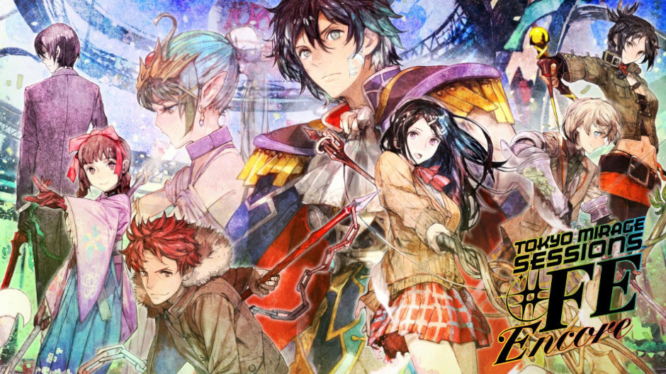
Tokyo Mirage Sessions – Pre-release Thoughts Before the Switch Port Launches

Tokyo Mirage Sessions #FE was a game that I was excited for back in the Wii U days. This actually was not the case for many people that were fans of Fire Emblem, Shin Megami Tensei, or both.

Tokyo Mirage Sessions #FE is the final result of the fabled “Shin Megami Tensei X Fire Emblem” crossover game. Instead of being an actual crossover in terms of characters and worlds, Tokyo Mirage Sessions went for a different style of crossover where ideas from both games were blended, as opposed to having Shin Megami Tensei and Fire Emblem characters interact with each other.

If you remembered this and how dark and gritty the trailer looked: Sorry you are still not qualified for a veteran’s discount. It’s not that old yet.

Whether we would have been better off with one or the other is unimportant though. Upon the release of the first trailer under the name “Shin Megami Tensei & Fire Emblem Crossover Project Gameplay Trailer”, many people chastised the game due to it’s focus on Japanese pop music, idol aesthetics, and the fact that the trailer didn’t really explain what the gameplay was like. Fans were pissed because Tokyo Mirage Sessions was not what they expected, or wanted. Oddly enough, I was very intrigued by the trailer. The second “Reincarnation,” The game’s opening theme came on, I was personally sold on the music. I was in the minority of people who saw the trailer and liked the approach Atlus and Nintendo decided to take this deal, from the beginning at least.

I gotta admit, I didn’t expect this either.

Flash forward to the Japanese release, people are still dunking on the game. Most people have not played it, and based their opinions off of out of context clips, such as the performance of the Fire Emblem Main Theme. Certain hardcore Fire Emblem fans were hating on it due to TMS bringing the series closer to “Modern Anime,” while Shin Megami Tensei fans thought it looked too much like Persona with idol music. To top it off, people got the news that the Western version would receive censorship, which always starts fun localization discourse. More on this later though.

The western release finally drops. Critics are giving the game rather positive reviews, majority of players seem to be having fun with it, suddenly opinions about the game are mostly positive, with some naysayers getting the nonconstructive aspects of their criticism pushed aside. What gives?

I like to think people went in with very low expectations, and were surprised by the depth of the gameplay, the colorful cast of characters, and those who were into the type of music present throughout the soundtrack voiced their own opinions. There were still a few ramblings about censorship here and there, but most people agreed that the game was good, and turned out to be way more enjoyable than anyone expected it to.

In a way, this is my experience with the game. I didn’t go in with low expectations though, I just went in not knowing exactly what to expect. I had listened to a few of the songs after the game released in Japanese such as “Dream Catcher,” “Feel,” and “Maybe Friends?, Maybe Lovers?” but outside of it being a turn based RPG that borrows elements from Shin Megami Tensei, I had no idea what to expect. While Tokyo Mirage Sessions did not end up becoming my favorite JRPG, or even my favorite Wii U game. I still considered it to be a very positive experience on my Wii U, and for the most part, I had a really good time with it.

What SMT and FE Elements does this game have?

The battle system of Tokyo Mirage Session, while inspired by SMT’s press turn system, is not an exact copy of it. In Shin Megami Tensei, exploiting an enemy’s weakness or landing a critical hit lets you go in for one more attack with the same character. in Tokyo Mirage Sessions, doing one of the above creates a “Session” where your other characters attack immediately after you, even if it’s not their turn on the turn wheel, and you chain more attacks if each team member uses attacks that the enemy is weak against. You get basic SMT attacks that you probably recognize if you’ve played any game in the series, including Persona. All the element names are there (Agi, Garu), physical attacks like slash and cleave. Everything here should feel familiar to you if you’ve at least played one game in the series.

The main difference comes from the fact that demons/personas are out of the picture. Instead you get beings called “Mirages.” Each of the Mirages are based off of popular Fire Emblem characters from Fire Emblem: Shadow Dragon and Fire Emblem: Awakening, since they take place in the same world. Despite Tokyo Mirage Sessions drawing it’s gameplay concepts from mainline Shin Megami Tensei more than Persona, the Mirages are essentially Personas that your character keeps permanently, and can you upgrade and even class change them as the game progresses. You do not have to worry about the concept of demon fusion in this game. You spend time with one Mirage the entire time, including your main character.

Mirages being based off of Fire Emblem characters, and Tiki being the world’s Hatsune Miku are where most of the Fire Emblem references end though. Dungeon design is more based off of mainline Shin Megami Tensei games such as Nocturne and IV, which had handcrafted dungeons, instead of the randomized hallways of Persona 3 and 4. At the time, Persona 5 had not come out yet. While the dungeons in Tokyo Mirage Sessions are mostly fun, there are a few that are confusing and tedious. Overall, if you like the gameplay of any of these games, I would say you are in for a fun, but flawed time.

Music and Voice Work

Music is a very important part of TMS. There’s attacks with songs, your female lead is an idol, and there’s cutscenes that are full fledged music videos with subtitles for the lyrics. Not all of the music is Japanese pop music, considering the rest of the soundtrack is filled with atmospheric tracks that you might expect from a colorful game that takes place in Tokyo. The battle theme sounds more like techno than J-Pop, and this extends to the boss themes, really fitting the concert stage vibe that the battle screens set up.

Majority of the songs in this game are actually lyricless!

Though if Japanese pop music is not your thing, you may not care for the music videos and their accompanying audio. Each of the songs sound very different from one another though, so I think everyone will find at least one song that they like. Personally I found great enjoyment in most of the songs, especially “Dream Catcher.” All of them are incredibly catchy, and even have phonetically translated lyrics! Basically if you want to sing along, but don’t want to butcher Japanese, the English lyrics are written in a way where you can sing along just fine.

Try singing along with the lyrics! the third or fourth line is a little poorly timed but this shit is COOL OKAY.

As for the voice work, there is only a Japanese track. Understandably so because all the songs would be difficult to dub, and arguably, this game is similar to something like Yakuza where the voice track being in Japanese enhances your immersion to the game’s setting. I do not feel like I am fully qualified to critique Japanese voice work, but it all sounds great and the singing is fantastic.

So… Is the Story Good?

The story is quite possibly the most average part of this game. There’s nothing particularly bad about the story, but I can’t think of any moments that stick out. Most players seem to think the same way. What keeps you invested in Tokyo Mirage Session’s happenings are the characters. They seem like a bunch of standard anime archetypes, and in a way they are, but the dialogue written for each of them is pretty well written, and the more you progress the more you really care about them. I can not say the same thing about the protagonist though. While you do not control a silent protagonist, despite having more speaking lines than your standard Persona protagonist, he manages to be even more boring than Yu Narukami or Joker could ever be, feeling like a standard, cookie cutter MC that you’d find in almost any seasonal anime. Overall though, you are in for an entertaining ride, but do not expect to be awed at any moment. This is more of a character driven story in the first place, with each of the main cast having their own arcs.

On the Topic of the Edits or “Censorship”

Being honest to call what was changed in Tokyo Mirage Sessions censorship would be a disservice to the word since it was willingly done by the game developers and the staff at NOJ and NOA. That being said there are noticeable changes from the Japanese release to the Western release. Note that all of these will be in the Japanese and Western releases of Encore on the Switch, due to the Western Wii U version receiving many bugfixes that were not present in the Japanese release, so the Western release is being used as the base for every region.

  • A few outfits are edited to hide some skin
  • You can no longer randomly see panty shots during battle
  • An enemy’s cleavage is obscured by smoke
  • Characters are aged up slightly. Ex: Tsubasa Oribe is 18 in the western release and 17 in Japan.
  • Any references to gravure (essentially, Japanese Bikini modeling) are removed.
  • Due to gravure references being removed, the plotline of a dungeon is entirely rewritten in the western release, and even has dialogue re-recorded by the Japanese voice actors to reflect this change.

For the most part, I have little issue with these changes. I’m neutral on the majority of them. “Vagina bones” as someone put it, being taken out, do not bother me. I will say one outfit is really poorly edited, but the rest look fine. There are some issues with the consistency of the edits though. For example, despite removing all references to gravure modeling, there is a short commercial played in the game where Tsubasa shows up in a bikini.

This is an example of one of the well edited outfits. Left: Japanese, Right: English
This one however, seems awkwardly edited. This also does not really hide anything, it’ just makes her boobs a different color?

Touching up on the last point though, the plot line of that dungeon changes, and for the worst. All that I can really say without spoiling anything is: the edits make the dungeon edits feel less like a normal localization change, and more like an episode of the 4Kids One Piece dub. Even if you were not informed of the edits, it is so blatantly obvious that the scene has been changed, and this partially due to the dungeon’s boss having a motivation that will not make much sense, and doesn’t even carry a fraction of the intent that the original scene had. Thankfully, only one dungeon receives this change. The rest remain untouched, and while the changes to the dungeon’s storyline are awkwardly implemented, it ends up not mattering too much in the grand scheme of the story, though it does lose a relevant story theme regarding the darker side of the Japanese idol industry.

Final Thoughts

That being said, I feel like if you’re a fan of either idol music, Shin Megami Tensei, Persona, Fire Emblem, JRPGs, or all of the above, there is something for you to enjoy in this game. Any drama surrounding it does not change the fact that no matter what version you play, its a very well made turn based RPG, that comes from the Wii U, which was severely lacking in that genre. I do implore people to check out the new Switch release, though there is a chance that the game may not be for you.

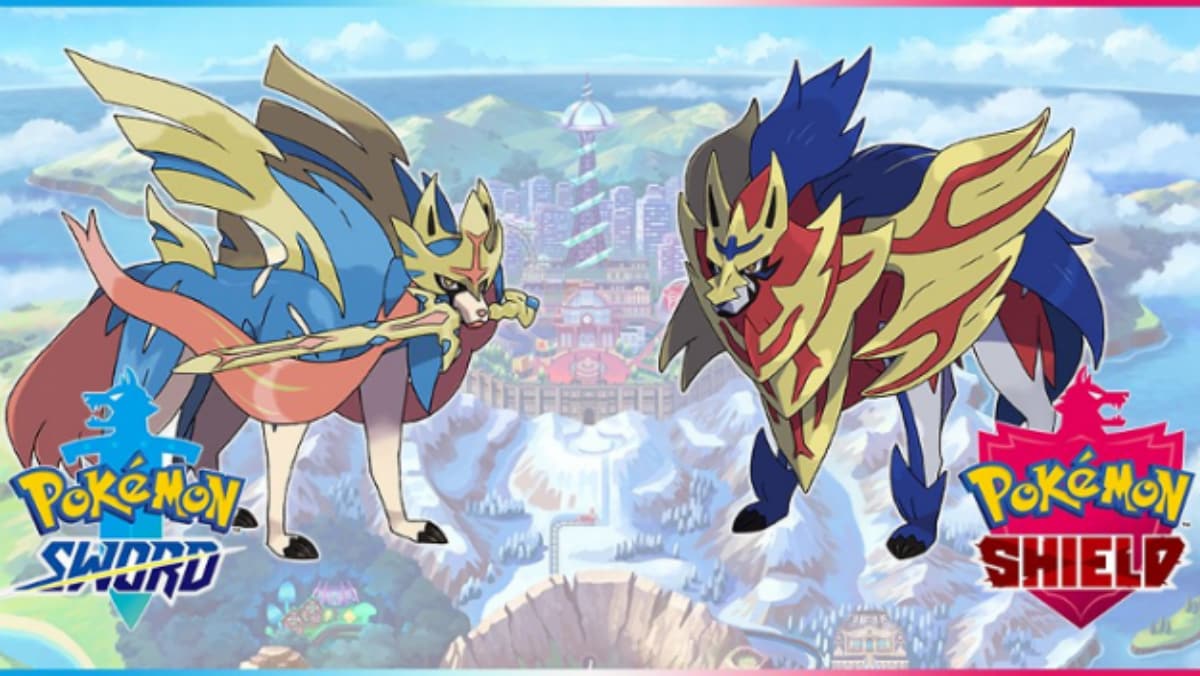
Pokemon Sword and Shield Review

Pokemon Shield version is quite possibly the most mixed I’ve ever been on a game in a while. While I did enjoy the game, and I felt like it was in very consistent quality with the other Pokemon games, I do feel like Pokemon’s first mainline home console outing leaves a lot to be desired.

Gameplay:

Pokemon Shield brings back the standard turn based battle system. Some moves and Pokemon are cut, but it’s still the same game you’ve come to know. For the most part, there is nothing bad about the gameplay. It can move a little slow at times, but the battle system has not been changed much. The main additions to the gameplay are the open world Wild Area, and the Dynamax system used during gym battles. If there is one thing that this game excels at, it is the gym battles. Every battle gym battle feels special and even more hyped up than usual. The game treating gym battles as an actual sporting event heightens this even further. Sword and Shield also has atypical progression for a Pokemon game, feeling like a much needed mix up for this series.

 Pokemon appearing on the open world with minimal random encounters is a MUCH welcome change too. The EXP share feels very balanced this time around and encourages you to experiment with more Pokemon. HMs are also gone, and your bike is what allows you to surf. This game is FULL of quality of life improvements, some you may be surprised didn’t happen a while ago. The Wild Area is also quite possibly the best edition to the series in a while, and gives you a reason to turn on the game to explore for a bit.

There are some criticisms to be had of the gameplay though. One is that there does appear to be significantly less content in this one, story-wise. While I will get to the story itself later in this review, when it comes to the progression, there’s not a lot here compared to past Pokemon games. The post-game is also rather short compared to the likes of BW2 and HGSS, and even Emerald and Platinum. The progression really is just: beat the eight gyms, challenge the league, short post game chapter, and then there’s not much to do besides the battle tower, and exploring the wild area. The towns are another issue. While they look nice, the towns and cities in this game are incredibly barren. There’s not much to do in any of them besides talk to NPCs and going to a gym. There are no department stores or anything that makes a town stand out, other than your first impression that you judge by the atmosphere and music. This makes the towns just feel like a dressing or a roadblock, rather than actual towns filled with people.

Many Pokemon are also cut, though I miss majority of them less than I thought. There’s still plenty, and you can have a rather varied team. While it would be nice to have them all in, I can understand the constraints.

Sound:

It feels like this game was made with voice acting in mind, but it never got done. There’s detailed cinematics and mouth movements, and even a scene where someone is supposed to be singing. However, there’s no voice acting at all. Not even something like a beeping effect to simulate it. Despite this, I have no issue with the sound design for Pokemon cries and the rest of the world.

The music has even gotten an upgrade, at least when it comes to towns and overworld themes. The OST almost makes the towns feel less barren than they really are. The Gym Battle theme is the best in the series, and you even have the crowd joining in when the gym leader is down to their last Pokemon.

It’s the Wild Battle and Trainer Battle themes that I could see people not liking though. For lack of a better descriptor, they sound busy. I adore the way the Trainer Battle theme sounds, but I cannot say the same for the Wild Battle theme, which will grate on your ears after hours of playing.

Story/Characters:

Pokemon Shield feels focused on world building and character development rather than actual story. The story is very barren, and basically boils down to “person fights way through the Pokemon League.” There is a plot here, but what’s there is VERY barren. Instead the game put more effort into making characters like Hop, the friendly rival, and Bede, the asshole rival, have their own arcs. Personally, I never felt like Pokemon needed  a complex story but I will admit the story of Pokemon Black and White was a much welcome change of pace. Despite the absence of an actual evil team, it felt about as competent as other Pokemon stories.

Also, the gym leaders and champion are very memorable. I had no problem with them.

Art/Graphics:

If there’s one thing this game excels at it is art and character design. Every town feels lovingly crafted, when it comes to design, and the character designs are all on point. Gym leaders are stylish, main characters are stylish and memorable, nothing wrong here. The new Pokemon however, are a bit more mixed. Some of them I really liked the designs of, others do not seem right. The legendries in this game do nothing for me too. Sonia and Melony, however, can step on me any day, thank you very much.

The main issue with the graphics doesn’t come from the art direction or the textures, but the animations. Most of the new moves have great animations, then you have incredibly lazy ones like the double kick attack, and you wonder who approved it for a game made in 2019.

Overall, I feel like Pokemon Sword and Shield are good games, but it feels like it could have used more time in the oven. Yearly releases mean that any change is going to be a slow process though, but I do believe that TPC and Gamefreak are listening to our criticisms  with the myriad of QOL improvements added to this particular game alone. The QOL improvements, gym battles, and the streamlined progression of this entry make Pokemon Shield very enjoyable, despite controversies you may have seen all over social media about animation quality, the Pokedex, and more.

Design a site like this with WordPress.com
Get started